
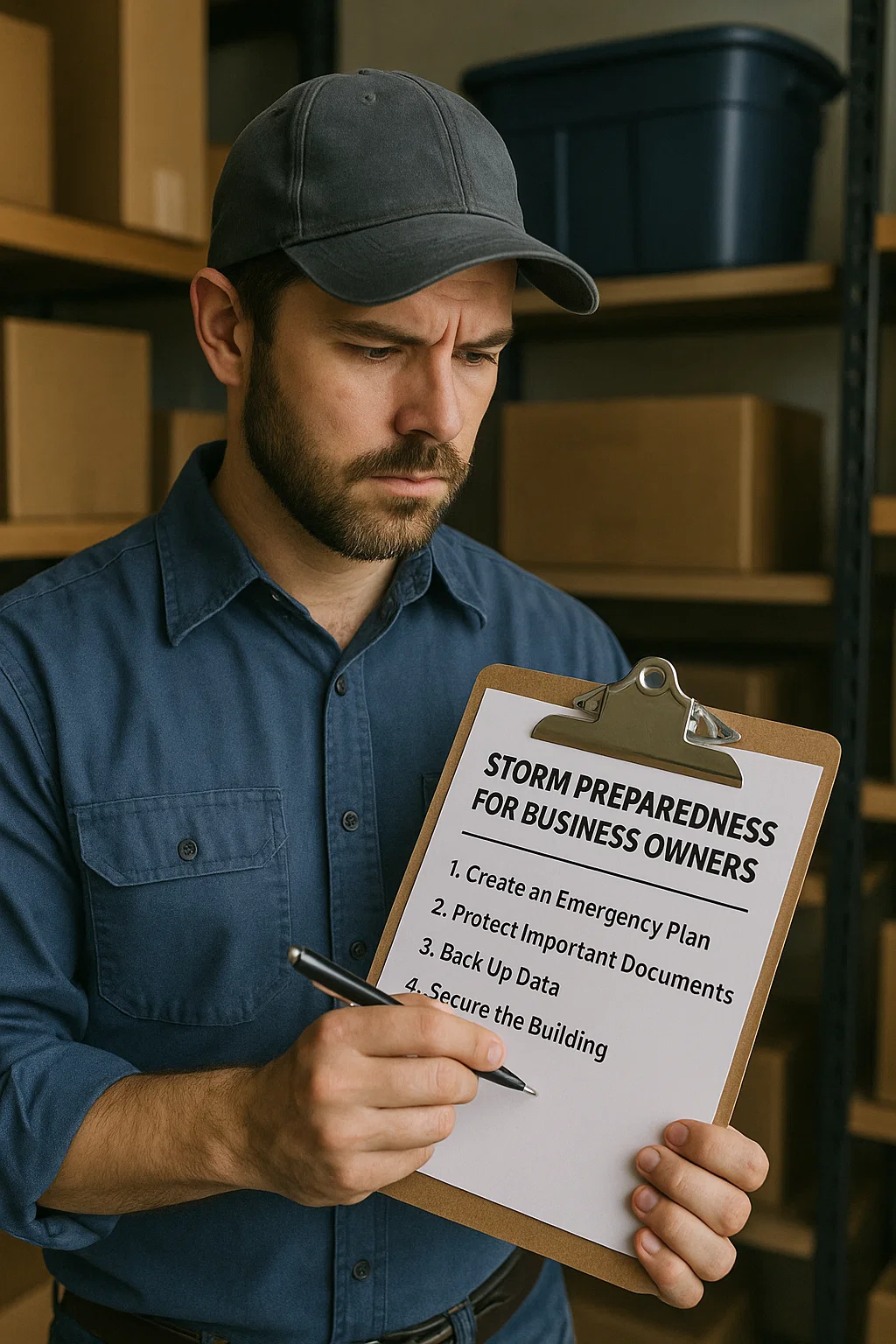
When a storm threatens your area, the stakes are high for business owners. Disruptions caused by hurricanes, tropical storms, and severe weather events can affect everything from your physical building and equipment to your revenue and ability to serve customers. While no one can fully predict or prevent a storm, there are strategic steps you can take to improve your commercial insurance readiness and mitigate potential business risks.
In this guide, we’ll walk you through key storm preparedness tips focused on commercial insurance planning, helping you strengthen your business before storm season hits.
Why Storm Preparedness Matters for Businesses
Storms can have widespread and long-lasting impacts on business operations. Being unprepared can lead to delays in reopening, increased financial losses, or even permanent closure in extreme cases. Having a solid preparedness plan in place not only safeguards your assets, but also helps maintain business continuity.
Benefits of strong storm preparedness include:
-
Helping reduce financial losses
-
Supporting a quicker recovery period
-
Minimizing business downtime
-
Improving employee and customer safety
1. Review and Update Your Commercial Property Insurance
Start by reviewing your commercial property policy to ensure it reflects the current state of your business and assets.
What to check:
-
Building coverage: Confirm it reflects the cost to repair or rebuild based on current construction prices
-
Contents coverage: Ensure coverage includes furniture, technology, machinery, and inventory
-
Named perils vs. all-risk coverage: Understand what types of weather events are included
-
Exclusions: Identify if windstorm, hail, or water damage is excluded or has special conditions
Action items:
-
Update your policy if you’ve renovated, expanded, or added equipment
-
Confirm that any recent changes to your property are documented
-
Schedule a policy review with your insurance advisor
2. Understand Business Interruption Coverage
Business interruption insurance, also called business income coverage, can be a lifeline when operations are temporarily halted due to storm damage.
Key points to understand:
-
Covers lost income and operating expenses during a covered closure
-
Often includes relocation costs or expenses to operate from a temporary location
-
May include coverage for payroll and loan payments
What to do:
-
Confirm your policy includes business interruption coverage
-
Understand the coverage limits and waiting period before benefits begin
-
Ask if contingent business interruption (for suppliers/customers impacted) is included
3. Assess Flood and Water Damage Exposure
Standard commercial property insurance often does not cover flood damage, even if caused by a storm. A separate flood insurance policy is typically required.
Consider the following:
-
Are you in a high-risk flood zone?
-
Does your location experience frequent heavy rainfall or storm surge?
-
Do you store important assets at or below ground level?
Next steps:
-
Visit FloodSmart.gov to assess your property’s flood risk
-
Speak with your agent about obtaining a commercial flood policy
-
Consider coverage for sewer backup or water intrusion if not already included
4. Protect Business Vehicles
If your business owns or operates vehicles, make sure they are covered for weather-related damage.
Checklist:
-
Ensure comprehensive coverage is included on all commercial auto policies
-
Confirm coverage for wind, hail, flood, and falling objects
-
Identify safe locations to store vehicles during a storm
Pro Tip: Document the condition of your fleet with photos in advance of a storm.
5. Inventory Your Assets and Maintain Documentation
Having an up-to-date inventory helps streamline the claims process if your business experiences damage.
What to document:
-
Equipment, furniture, and inventory
-
Serial numbers, purchase receipts, and estimated value
-
Photos and videos of your facility and contents
How to store records:
-
Save documents and backups to the cloud
-
Keep hard copies in a waterproof, fireproof container
-
Share a copy with your insurance provider or broker
6. Know Your Deductibles and Limits
Understanding your deductibles is essential when budgeting for potential out-of-pocket costs after a storm.
Types to review:
-
Standard deductible: Usually a fixed dollar amount
-
Windstorm/hurricane deductible: Often calculated as a percentage of the insured value (e.g., 2% of a $1 million property = $20,000)
Tips:
-
Review the deductible amounts with your agent and assess whether they align with your risk tolerance
-
Consider increasing deductibles to reduce premiums only if you have sufficient cash reserves
7. Evaluate Liability Coverage
Storms can lead to third-party injuries or property damage involving your business premises.
Liability coverage to consider:
-
General liability insurance: Covers claims of bodily injury or property damage to third parties
-
Umbrella/excess liability: Provides additional limits above your existing policies
-
Tenant liability: For businesses leasing property, verify who is responsible for storm-related damage
Next steps:
-
Ensure your liability limits reflect your current risk exposure
-
Consult your broker about any special endorsements for storm-related liability
8. Develop an Emergency Response and Continuity Plan
Your insurance is one piece of the puzzle. Creating an internal emergency plan strengthens your overall resilience.
Key components of your plan:
-
Evacuation procedures and employee safety protocols
-
Contact information for staff, vendors, and emergency services
-
IT/data recovery strategy
-
Roles and responsibilities for storm preparation
Best practices:
-
Test the plan with drills or simulations
-
Review and update your plan annually before storm season
9. Ensure Coverage for Off-Site Operations
If your business stores inventory offsite or operates in multiple locations, verify those areas are also protected.
What to review:
-
Warehouses, satellite offices, storage units, etc.
-
Whether policies cover items in transit or stored at different addresses
-
Coordination of multiple policies under one commercial package
Tips:
-
Keep records and contact info for all covered locations
-
Consolidate coverage under one policy where possible for simplicity
10. Schedule a Pre-Season Insurance Review
One of the most effective ways to improve your preparedness is to schedule a dedicated insurance review before hurricane season begins.
What to discuss with your insurance advisor:
-
Coverage updates or endorsements that may enhance protection
-
Recent changes in business operations, staffing, or physical space
-
Potential premium savings for storm mitigation investments (e.g., reinforced roofing, shutters)
Why this matters:
-
Insurers may restrict changes or additions once a storm is forecasted in your area
-
Reviewing policies early gives you time to make informed decisions
Final Thoughts: Strengthen Your Business by Planning Ahead
Storm preparedness for business owners goes beyond boarding up windows. It’s about building a well-rounded strategy that includes insurance coverage, emergency planning, and risk mitigation. Being proactive today can help reduce disruption and uncertainty tomorrow.
Now is the perfect time to make sure your insurance coverage is where you want it. Give our team a call at (813) 876-4166 or email us at documents@bgains.com to schedule a quick policy review. We’re here to help you feel more prepared and confident this hurricane season!
The information provided in this blog is for general informational purposes only – insurance coverage and eligibility may vary based on individual circumstances and carrier guidelines. No guarantees or promises are made regarding outcomes, coverage, or pricing.